Fallen angels and Milton's 'Paradise Lost'


In Western literature and art, fallen angels became a popular theme primarily after Milton’s Paradise Lost (1667). Milton depicts a memorable Satan, Prince of the Air, who commits incest with his daughter, Sin, and they have a child, Death, who then rapes his Mother! (Pictures here)
Better to reign in Hell, than serve in Heaven.
It was racy stuff for the 17th century and it was an instant best-seller. No one yet has topped William Blake’s observation that Milton himself was "of the Devil’s party without knowing it." But Herman Melville was perhaps more accurate when he called out Milton as an atheist who "teaches under a masque, and makes the Devil himself a Teacher & Messiah."
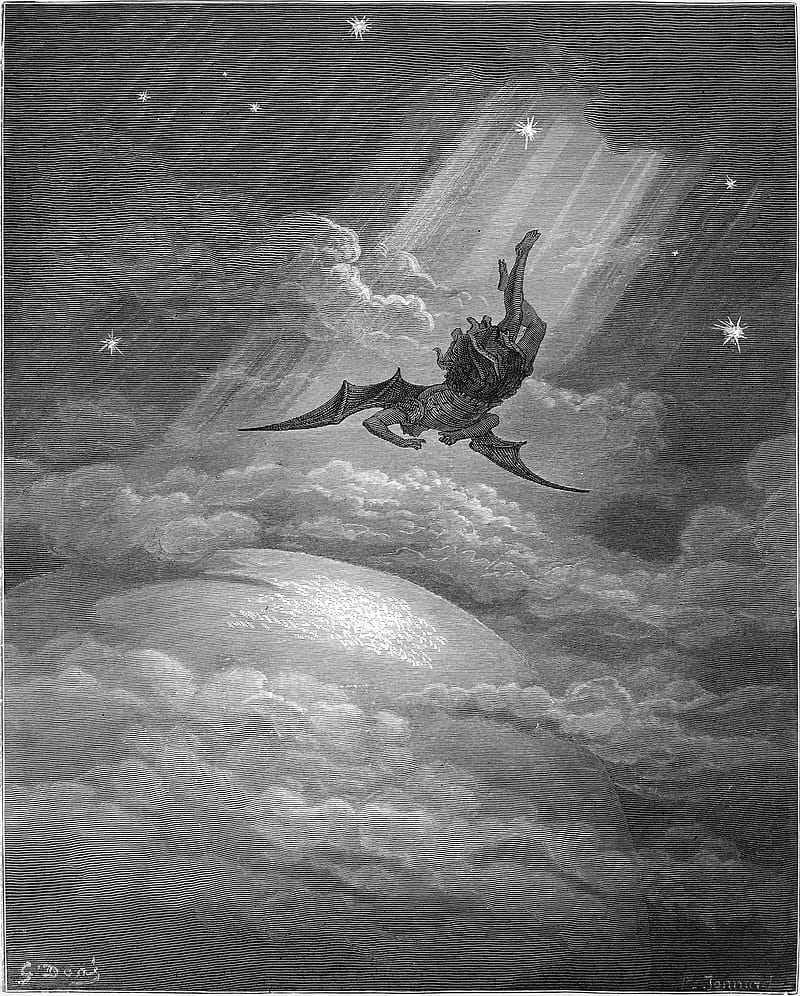
The spectacular image below is among Gustave Doré's best illustrations for an edition of Paradise Lost around 1866.
The earliest tale of fallen angels is in the apocryphal Three Books of Enoch, which may date to the 2nd century BC. It tells of the Grigori (or “Watchers”), angels who lust after the women on earth. Some of the Watchers even took wives and had children – the giants known as the Nephilim (referred to in Genesis 6). An angry God threw them all out of Heaven, transforming them into demons, and then sent the Great Flood to wash them all away (after warning Noah of course). The Three Books of Enoch were rediscovered by the West in the 18th century in Ethiopia, but other fragments in Greek and Aramaic exist.

Fallen angels came into their own in Romantic times in Goethe’s Faust, Blake, Byron, Poe, Fuseli, Gustave Doré and many other 19th century writers and painters. Nowadays they are a staple of pop culture, from Tolkien to Charmed to Japanese manga and anime, such as Neon Genesis Evangelion and Angel Sanctuary.